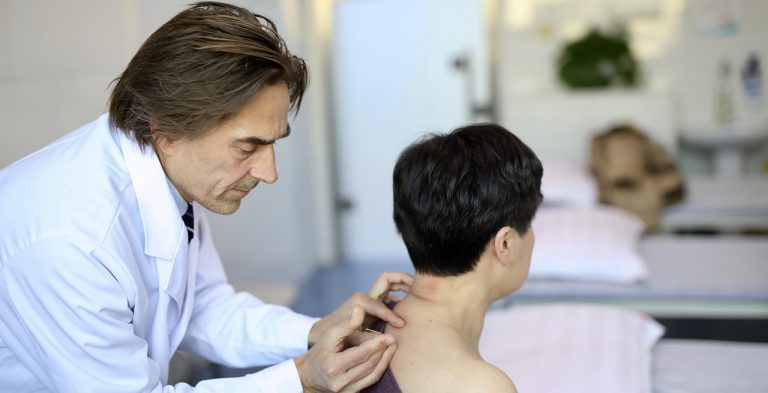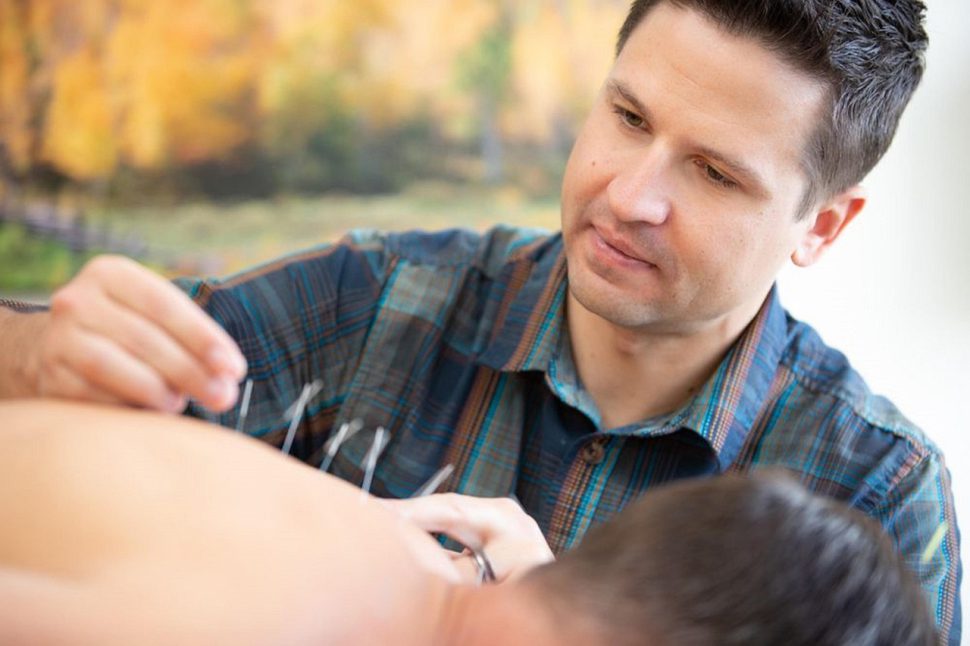
For many people, the biggest question about acupuncture is not whether it works but whether it is safe. Needles can sound frightening, and stories online range from “completely harmless” to alarming. The real picture is calmer: when done by a trained, licensed practitioner using sterile, single-use needles, serious problems are rare. Minor effects are more common, and a few situations call for extra care.
This guide explains what the needles are like, which side effects are common, which rare risks to know about, who should check with a doctor first, and who may legally practice acupuncture in New York.
What the needles are like
Acupuncture needles are very fine, and they do not inject anything into the body (NYSED: Acupuncture consumer information). The NIH’s National Center for Complementary and Integrative Health (NCCIH) says the FDA regulates acupuncture needles as medical devices and requires them to be sterile and labeled for single use only.
New York’s State Education Department calls single-use, pre-sterilized disposable needles the preferred standard of practice, and suggests that patients ask whether their acupuncturist uses disposable needles. NYSED also notes that treatment may include electrical stimulation or moxa, a form of heat therapy, so ask what your session will involve.
Common, minor side effects
The National Cancer Institute’s professional summary on acupuncture lists these minor effects that have been reported:
- pain where a needle was placed;
- a small collection of blood under the skin (hematoma), like a bruise;
- tiredness or drowsiness;
- lightheadedness;
- mild skin irritation at a needle site.
These usually pass on their own. Because drowsiness and lightheadedness can happen, it is reasonable to sit for a moment before getting up, and to plan your trip home if you feel unusually sleepy. Tell your acupuncturist if you have ever fainted during a needle procedure.
Rare but serious risks
NCCIH says relatively few complications have been reported, and that complications have come from nonsterile needles and improper technique. When acupuncture is not done properly, it can cause:
- Infections. The National Cancer Institute notes that most infections in older case reports were hepatitis, mainly from the late 1970s and early 1980s, and that very few have been reported since 1988, when disposable needles came into wide use and clean-needle training became a licensing requirement.
- Injury to organs or nerves. A 2004 review of reported adverse events found that the most common injuries were a punctured lung (pneumothorax) and injury to the central nervous system.
How rare is “rare”?
The same 2004 review combined 12 prospective studies covering more than a million treatments. It estimated the risk of a serious adverse event at about 0.05 per 10,000 treatments, and concluded that the risk is very low, below that of many common medical treatments. The author also said some events, especially injuries and some infections, are likely avoidable. That is why training, licensing and clean technique matter.
Warning signs after a session
Get medical care promptly if you notice any of these after acupuncture:
- Call 911 for sudden shortness of breath, chest pain, or trouble breathing, especially after needles were placed on the chest, upper back or shoulders.
- Redness, warmth, swelling, pus or increasing pain at a needle site, or a fever, which can be signs of infection.
- New numbness, weakness, or a severe headache.
- A bruise that keeps growing, or bleeding that does not stop with gentle pressure.
When to see a doctor first
New York requires licensed acupuncturists to advise each patient to see a physician about their condition, and to keep a signed form in your record showing they did. You get a copy (Education Law section 8211). Talk with your doctor before starting if you:
- take blood thinners or have a bleeding disorder, since bruising and bleeding at needle sites are known minor effects;
- are getting chemotherapy or radiation, or otherwise have a weakened immune system. The National Cancer Institute says a strict clean-needle method must be used for people with cancer;
- are pregnant, especially with complications, so your obstetric provider can weigh in;
- have new, severe or unexplained symptoms such as numbness, weakness, fever, unexplained weight loss, or loss of bladder or bowel control.
NCCIH also advises against using an unproven practice to put off seeing your health care provider, and encourages you to tell all your providers about every approach you use (NCCIH).
Simple ways to lower your risk
- Check the license before your first visit (see below).
- Watch the needles. You can ask to see that needles come from sealed, single-use packages and are thrown away after use.
- Share your health history, including medicines, supplements, pregnancy and any history of fainting. NYSED urges patients to answer health questions completely and accurately.
- Ask whether your condition is appropriate for acupuncture, and whether the acupuncturist has experience treating it, as NYSED suggests.
- Speak up during treatment if a needle causes sharp pain, and try to stay still while needles are in.
Our guide to questions to ask before your first visit has more.
Is it worth it?
Safety is only half of the decision. Research suggests acupuncture may help some kinds of pain, such as back and neck pain and knee arthritis, but shows little or no benefit over sham treatment for several other uses. Our guide Acupuncture: what the research says covers the evidence condition by condition.
New York licensing: who may use acupuncture needles
In New York, only two groups may practice acupuncture: licensed acupuncturists, and physicians or dentists who are certified in acupuncture (Education Law section 8212). The law carves out a few narrow exceptions, such as approved addiction-treatment programs and students in training (section 8216).
- Licensed acupuncturists (L.Ac.) complete at least 60 semester hours of college and an approved acupuncture program. A program judged equivalent must include supervised clinical training covering needling technique, contraindications and precautions, emergencies, when to refer patients and acupuncture hygiene. Applicants pass national exams from the National Certification Board for Acupuncture and Herbal Medicine (NYSED: Acupuncture license requirements).
- Certified acupuncturists are licensed physicians or dentists who have completed at least 200 hours of approved acupuncture instruction and 100 hours of supervised experience, according to NYSED.
Whoever treats you, you can check their license, current registration and any discipline with NYSED’s Online Verification Search. Our guide on how to check a New York license walks you through it.
Every profile in our acupuncturist listings links to that lookup, with the practice address and phone. Search by town, or browse acupuncturists in Westchester, Rockland or Putnam. We do not rank or recommend anyone.
This is general information, not medical advice. Talk with your doctor before starting a new treatment. In an emergency, call 911.
Sources
- NCCIH: Acupuncture: Effectiveness and Safety
- NCCIH: Are You Considering a Complementary Health Approach?
- National Cancer Institute: Acupuncture (PDQ), Health Professional Version, Adverse Effects
- National Cancer Institute: Acupuncture (PDQ), Patient Version
- White A., A cumulative review of the range and incidence of significant adverse events associated with acupuncture, Acupuncture in Medicine, 2004 (PubMed abstract)
- NYSED: Acupuncture consumer information
- NYSED: Acupuncture license requirements
- NY Education Law section 8211: Acupuncture definitions and patient advisement
- NY Education Law section 8212: Practice of acupuncture and titles
- NYSED Office of the Professions: Online Verification Search